Studies in science - Latest news on science

study suggests: Low-salt diets may not be beneficial for all

Posted by Unknown
A large worldwide study has found that, contrary to popular thought, low-salt diets may not be beneficial and may actually increase the risk of cardiovascular disease (CVD) and death compared to average salt consumption.

In fact, the study suggests that the only people who need to worry about reducing sodium in their diet are those with hypertension (high blood pressure) and have high salt consumption.
The study, involving more than 130,000 people from 49 countries, was led by investigators of the Population Health Research Institute (PHRI) of McMaster University and Hamilton Health Sciences.
They looked specifically at whether the relationship between sodium (salt) intake and death, heart disease and stroke differs in people with high blood pressure compared to those with normal blood pressure.
The researchers showed that regardless of whether people have high blood pressure, low-sodium intake is associated with more heart attacks, strokes, and deaths compared to average intake.
"These are extremely important findings for those who are suffering from high blood pressure," said Andrew Mente, lead author of the study, a principal investigator of PHRI and an associate professor of clinical epidemiology and biostatistics at McMaster's Michael G. DeGroote School of Medicine.
"While our data highlights the importance of reducing high salt intake in people with hypertension, it does not support reducing salt intake to low levels.
"Our findings are important because they show that lowering sodium is best targeted at those with hypertension who also consume high sodium diets."
Current intake of sodium in Canada is typically between 3.5 and 4 grams per day and some guidelines have recommended that the entire population lower sodium intake to below 2.3 grams per day, a level that fewer than five per cent of Canadians and people around the world consume.
Previous studies have shown that low-sodium, compared to average sodium intake, is related to increased cardiovascular risk and mortality, even though low sodium intake is associated with lower blood pressure.
This new study shows that the risks associated with low-sodium intake -- less than three grams per day -- are consistent regardless of a patient's hypertension status.
Further, the findings show that while there is a limit below which sodium intake may be unsafe, the harm associated with high sodium consumption appears to be confined to only those with hypertension.
Only about 10 per cent of the population in the global study had both hypertension and high sodium consumption (greater than 6 grams per day).
Mente said that this suggests that the majority of individuals in Canada and most countries are consuming the right amount of salt.
He added that targeted salt reduction in those who are most susceptible because of hypertension and high salt consumption may be preferable to a population-wide approach to reducing sodium intake in most countries except those where the average sodium intake is very high, such as parts of central Asia or China.
He added that what is now generally recommended as a healthy daily ceiling for sodium consumption appears to be set too low, regardless of a person's blood pressure level.
"Low sodium intake reduces blood pressure modestly, compared to average intake, but low sodium intake also has other effects, including adverse elevations of certain hormones which may outweigh any benefits. The key question is not whether blood pressure is lower with very low salt intake, instead it is whether it improves health," Mente said
Dr. Martin O'Donnell, a co-author on the study and an associate clinical professor at McMaster University and National University of Ireland Galway, said: "This study adds to our understanding of the relationship between salt intake and health, and questions the appropriateness of current guidelines that recommend low sodium intake in the entire population."
"An approach that recommends salt in moderation, particularly focused on those with hypertension, appears more in-line with current evidence." The study was funded from more than 50 sources, including the PHRI, the Heart and Stroke Foundation of Canada and the Canadian Institutes of Health Research.
Story Source:
The above post is reprinted from materials provided by McMaster University. Note: Materials may be edited for content and length.
Continue

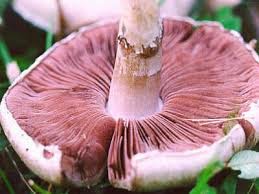
REPRODUCTION PROCESS OF AGARICUS

Posted by Unknown


Vegetative body mycelia and consist of septate much branched hyphae. Spore on germination develop into monokaryotic or primary mycelium, either + or- typ. The primary mycelium is short lived and it soon transform into diakaryotic or secondary mycelium by the fusion of two cell of different monokaryotic mycelium following clamp connection. The hyphae of the diakaryotic mycelia interlace
twist together to form thick hyphal cord, called rhizomorph which bear the fruit bodies.
Continue

METHODS TO PRODUCE BIOPESTICIDES/INSECTIDES USING NEEM

Posted by Unknown 2 Comments
Neem fruits
In developing countries, the losses of crops due to pest, plant disease and competition from weeds is great. In households, pest and insects such as mosquitoes, cockroaches, mice etc pose risks such as the destruction of furniture, clothing and to the causation of various diseases, most seriously; malaria. Pesticides/insectides produced to kill these pests in order to prevent these damages, also tend to have adverse effects on humans in various ways, most especially those produced from synthetic materials. These adverse effects of headache, dizziness, catarrh worth investigating. The insecticides range from agricultural to household pesticides. Every category has its own effect, both on the targeted pest/insect and the environment in which it lives.Neem has attracted worldwide attention in recent decades mainly due to
Continue

USE OF RAUWOLFIA SERPENTINA IN HIGH BLOOD PRESSURE

Posted by Unknown
Rauwolfia serpentina is a small erect glabrous shrub about1 to 3 feet in height, bearing white or pinkish flowers. It grows fairly wild in the United Provinces, also in Bihar and Eastern and Western Ghats. It is called ‘Sarpa-gandha’ in Sanskrit and ‘Chota Chand’ in Hindi.The roots, the leaves and the juice have been
Continue

Aloe vera plants products/benefits/uses/medicinal value (juice, gel, skin, cancer, burns)

Posted by Unknown
Aloe Vera, also known as the ‘plant of immortality’ by the ancient Egyptians, was used for its healing properties since time immemorial. The scientific epithet ‘vera’ means true and genuine. Aloe Vera plants are commonly found in the African regions and belong to the family of Liliaceae, known for its succulent or fleshy leaves. Aloe vera is a stemless or very short-stemmed succulent plant growing to 60–100 cm (24–39 in) tall, spreading by offsets. The leaves are thick and fleshy, green to grey-green, with some varieties showing white flecks on their upper and lower stem surfaces. The margin of the leaf is serrated and has small white teeth. The flowers are produced in summer on a spike up to 90 cm (35 in) tall, each flower being pendulous, with a yellow tubular corolla 2–3 cm (0.8–1.2 in) long. Like other Aloe species, Aloe vera forms arbuscular mycorrhiza, asymbiosis that allows the plant better access to mineral nutrients in soil. Aloe Vera leaf looks unique; lanceolate, it doesn’t have any stems and the edges of leaves have tiny spikes.
Continue

Medicinal uses of Rauwolfia

Posted by Unknown

Rauvolfia serpentina, or 'snakeroot' or 'sarpagandha' is a species of flowering plant in the family Apocynaceae. It is a evergreen trees and shrubs. The genus is named to honor Leonhard Rauwolf. The approximately 85 species in the genus can mainly be found in tropical regions. Rauvolfia caffra is the South African quinine tree. Rauwolfia serpentina is a small erect glabrous shrub about 1 to 3 feet in height, bearing white or pinkish flowers. It grows fairly wild in the United Provinces, also in Bihar and Eastern and Western Ghats. It is called ‘Sarpa-gandha’ in Sanskrit and ‘Chota Chand’ in Hindi. The roots, the leaves and the juice have been considered of medicinal importance from the very early times and have attracted the attention of the practitioners of the indigenous system of medicine. It has been used as an anthelmintic, as an antidote against snake bite and bites of other poisonous insects, in diarrhoea, dysentery, cholera and also as an ecbolic. In recent years interest has been stimulated in this drug, because of its well marked hypnotic and sedative properties.
Continue

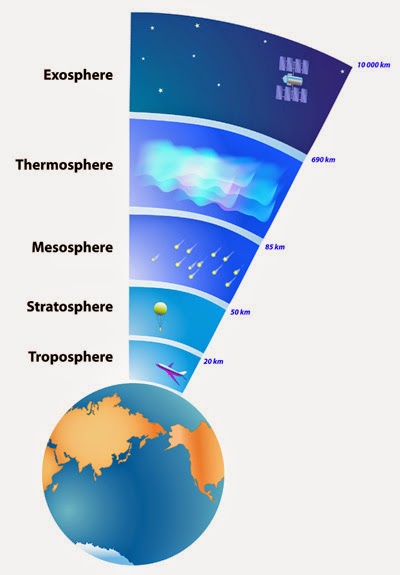
Atmosphere layers of earth

Posted by Unknown
The atmosphere of the Earth serves as a key factor in sustaining the planetary ecosystem. The thin layer of gases that envelops the Earth is held in place by the planet's gravity. Dry air consists of 78% nitrogen, 21% oxygen, 1% argon and other inert gases, such as carbon dioxide. The remaining gases are often referred to as trace gases,
among which are the greenhouse gases such as water vapor, carbon dioxide, methane, nitrous oxide, and ozone. Filtered air includes trace amounts of many other chemical compounds. Air also contains a variable amount of water vapor and suspensions of water droplets and ice crystals seen as clouds. Many natural substances may be present in tiny amounts in an unfiltered air sample, including dust, pollen and spores, sea spray, volcanic ash, and meteoroids. Various industrial pollutants also may be present, such as chlorine (elementary or in compounds), fluorine compounds, elemental mercury, and sulphur compounds such as sulphur dioxide [SO2].
Continue

capsicum frutescens medicinal uses

Posted by Unknown


Shrubby perennial plants; branches angular. Leaves broadly ovate, acuminate, usually wrinkled, more or less pubescent. Pedicels slender, usually 2 or more together. Calyx embracing the base of the fruit, usually cup shape. Corolla white or greenish white. Fruit red, ovoid, obtuse or oblong, acuminate.
Continue

Algae as a fuel /biofuel

Posted by Unknown
Algae are a very large and diverse group of simple, typically autotrophic organisms, ranging from unicellular to multicellular forms, such as the giant kelp (large brown alga), that may grow up to 50 meters in length. Most are photosynthetic and "simple" because they lack many of the distinct cell organelles and cell types found in land plants. The largest and most complex marine forms are called seaweeds. The lipid, or oily part of the algae biomass can then be extracted and converted into biodiesel through a process similar to that used for any other vegetable oil, or converted in a refinery into "drop-in" replacements for petroleum-based fuels. The algae's carbohydrate content can be fermented into bioethanol and biobutanol.
Continue

How To Download Torrent File With IDM

Posted by Unknown
Download torrent file with idm: We are already aware with Torrent. Torrent is the best place from where we can download any file from internet. With the help of torrent you can download any file like HD movies, HD videos, Software, PDF file, Games, Document and many more. There are many way to download torrent file on your pc but many torrent user are using torrent downloader to
Download-torrent-file-with-idm
download a torrent file. But Most of the torrent downloader users complain that the download speed of their torrent is too low. If you are one of them then you are at the right place. In this article we are show you another best way to download torrent file at high speed. We are also aware with IDM, which is the best and popular download manager for pc. Just imagine what happens if you can download torrent files with IDM at lightning speed? Sounds good right! Now this is possible in this article we are show you how to download torrent file with idm. So let’s see here the steps on how to download torrent file with idm at free. free music downloadapps for android
Continue

Physicists achieve longer distance quantum teleportation

Posted by Unknown


Physicists in Switzerland said today they had succeeded in teleporting the quantum state of a photon to a crystal, in which information transited from light to matter, over a record distance of 25 kilometres.
The experiment, conducted over optical fibre at the University of Geneva, beat the team's previous record in 2003 of six kilometres.
Continue

The complete and successful journey of ISRO’S Mars orbiter Spacecraft

Posted by Unknown

"History has been created. This is a very proud full moment for all Indians. ISRO’S Mars orbiter Spacecraft has successfully enters Mars orbit. Aaj MOM ka Mangal se milan ho gaya, aur Mangal ko MOM mil gayi," Prime Minister Narendra Modi said congratulating scientists from the Indian Space Research Organisation (Isro) for putting India on the world map of space exploration and becoming the first to have a successful Mars mission on debut. In this article we share the successful journey of MOS from starting to ending.
Continue

No sedative necessary: Scientists discover new 'sleep node' in the brain

Posted by Unknown


A sleep-promoting circuit located deep in the primitive brainstem has revealed how we fall into deep sleep. Discovered by researchers at Harvard School of Medicine and the University at Buffalo School of Medicine and Biomedical Sciences, this is only the second "sleep node" identified in the mammalian brain whose activity appears to be both necessary and sufficient to produce deep sleep. Published online in August in Nature Neuroscience, the study demonstrates that fully half of all of the brain's sleep-promoting activity originates from the parafacial zone (PZ) in the brainstem. The brainstem is a primordial part of the brain that regulates basic functions necessary for survival, such as breathing, blood pressure, heart rate and body temperature.
Continue

Unravelling cell division

Posted by Unknown


At this very moment thousands of our body's cells are duplicating and dividing. This is the mechanism by which the body repairs damaged tissues and regenerates others like skin and hair. It involves a fairly complex process known as "mitosis", during which the cell duplicates its genetic material and separates it into two identical halves, which are then split apart. It is crucially important that this process works well each and every time it takes place, as otherwise it could give rise to mutations that might trigger diseases such as cancer.
Continue

New protagonist in cell reprogramming discovered

Posted by Unknown

The protein Nanog, a transcription factor, is key to maintaining stem cells in a pluripotent state. Researchers from the Centre for Genomic Regulation have been investigating the role of this protein, and have just published an article in the prestigious journal Cell Reports where they reveal the mechanism whereby Nanog acts. The scientists have discovered that Nanog involves other agents and they have been able to detail their dynamics. In particular, by studying another protein that is also involved in cell reprogramming (beta-catenin) they have been able to improve the knowledge of Nanog's functioning.
Continue

A new quality control pathway in the cell

Posted by Unknown

yeast-cells
Proteins are important building blocks in our cells and each cell contains millions of different protein molecules. They are involved in everything from structural to regulatory aspects in the cell. Proteins are constructed as linear molecules but they only become functional once they are folded into specific three-dimensional structures. Several factors, like mutations, stress and age, can interfere with this folding process and induce protein misfolding. Accumulated misfolded proteins are toxic and to prevent this, cells have developed quality control systems just like any other production chain or manufacturing process.
Continue

New light on genetic roots: “Present day Europeans trace their ancestry back to three and not just two ancestral groups”

Posted by Unknown
According to the study, the beginning of agriculture and animal domestication, which began in the Near East about 11,000 years ago, had a tremendous impact on human lifestyle. Hunter-gatherers were replaced in many places by sedentary farmers, and there were large increases in population size that laid the foundation for larger towns and eventually complex societies.
Continue

NASA finds tiniest galaxy has 'supermassive' black hole

Posted by Unknown


Astronomers led by an Indian-origin scientist have discovered a monster black hole lurking inside one of the tiniest and densest galaxies ever known located 54 million light years from Earth.
Though the black hole is five times the mass of the black hole at the centre of our Milky Way, it is inside a galaxy that crams 140 million stars within a diameter of about 300 light-years, only 1/500th of our galaxy's diameter.
Continue

First time ever 'water-based battery' developed to generate electrical energy

Posted by Unknown


In a first, scientists have developed a long-lasting and more efficient water-based nuclear battery that can be used as a reliable energy source in automobiles and even in complicated applications such as space flight.
From cell phones to cars and flashlights, batteries play an important role in everyday life. Scientists and technology companies constantly are seeking ways to improve battery life and efficiency.
Continue

Enormous Balloon Will Carry Black Hole Hunting Telescope Aloft

Posted by Unknown


New York: A giant balloon fitted with a new NASA telescope to spot black holes is set to take off this month. Scientists at the Washington University in St Louis and NASA's Columbia Scientific Balloon Facility (CSBF) in Texas will launch the balloon, inflated with high pressure helium, that will carry the X-Calibur telescope high into the atmosphere.
Continue